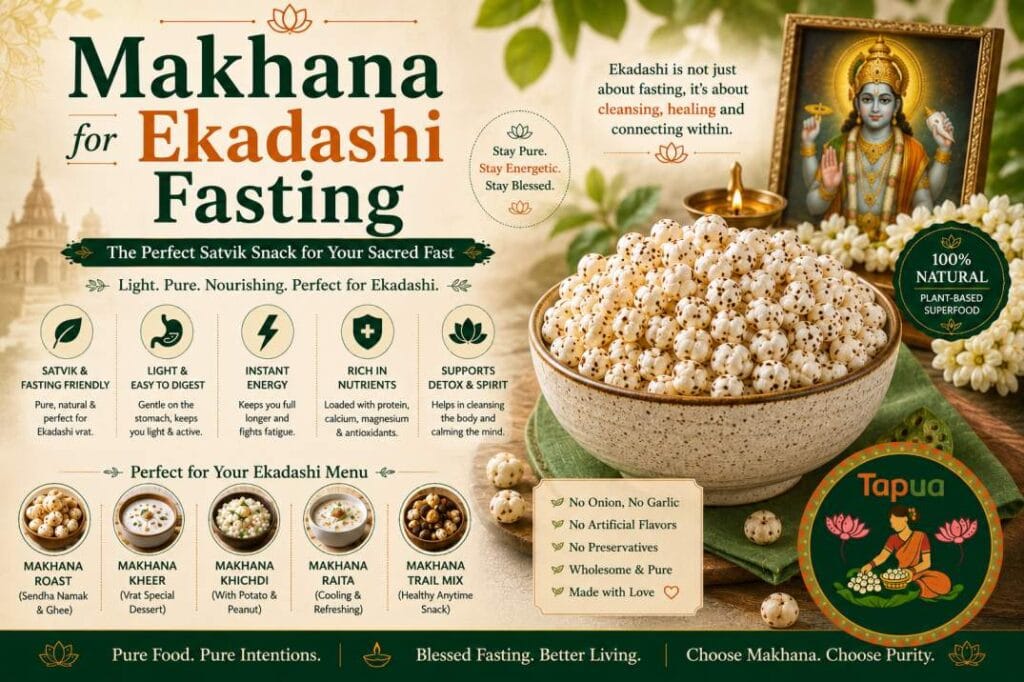
Ekadashi falls twice a month, on the eleventh lunar day of each fortnight, which means the question of what’s actually allowed during the fast comes up roughly twenty-four times a year for anyone who observes it regularly. Makhana for Ekadashi fasting is one of the more common searches around this, and the short answer is yes, it’s allowed, but the longer answer is worth knowing if you want to understand why rather than just take it on faith.
This guide covers the Ekadashi fasting rules that actually matter for food choices, why makhana, including a plain roasted bowl of Tapua makhana, clears them when grains and legumes don’t, and the specific date for Devshayani Ekadashi in 2026, which falls during one of the more significant Ekadashis of the year.
What’s Actually Restricted During Ekadashi
Ekadashi fasting rules vary by how strictly someone observes them, but the food restriction that applies across nearly all of them is the same: no grains, no cereals, and no legumes. Rice, wheat, lentils, and most beans are out, regardless of how the rest of the fast is structured. Religious texts describe a few different fasting intensities, from water-only fasts to phalahar, where fruits and a defined set of non-grain foods are permitted. Most people observing Ekadashi follow some version of phalahar rather than the strictest water-only fast.
Why Makhana Clears the Bar
Makhana isn’t a grain or a pulse. It’s the popped seed of Euryale ferox, an aquatic plant that grows in wetland ponds, which puts it in the same broad category as fruits and certain seeds rather than with rice or wheat. That distinction is exactly why it’s classified as phalahari, a fasting-appropriate food, in most Ekadashi food guides. It’s also light on the stomach and digests easily, which matters if you’re fasting through a full day without much else to eat.
How to Prepare It on a Fasting Day
Plain roasted Tapua makhana with a little ghee, rock salt (sendha namak rather than regular iodised salt, which some fasting traditions avoid), and a pinch of black pepper or jeera powder is the simplest version and keeps things vrat-appropriate. Makhana kheer, cooked in milk with a little sugar or jaggery and cardamom, is the other common fasting-day preparation, especially toward the evening meal when something warm and filling helps after a day of lighter eating. Both versions stay well within phalahar rules since neither uses grain, onion, garlic, or regular table salt.
When the Next Ekadashi Falls in 2026
Devshayani Ekadashi, one of the most significant Ekadashis in the Hindu calendar, falls on Saturday, July 25, 2026, marking the start of Chaturmas, the four-month period when Lord Vishnu is traditionally considered to be in repose. The Parana window, when the fast is broken the next morning, runs from 5:28 AM to 8:36 AM IST on July 26, 2026, for those observing in the New Delhi time zone. Local Panchang timings can shift this slightly depending on where you are, so it’s worth checking your city’s exact sunrise-based window before breaking the fast.
A Note for Anyone New to This
If you’re fasting for the first time or aren’t sure which intensity of Ekadashi fast suits you, that’s a conversation worth having with someone in your family who observes it regularly, since the rules shift slightly between strict water-only fasts and the more common phalahar approach. Makhana fits comfortably into the phalahar category either way, which is part of why it shows up so often in fasting kitchens across Bihar and well beyond it.
Common Questions
Can you eat makhana on Ekadashi?
Yes. Makhana is classified as phalahari, a fasting-appropriate food, since it comes from an aquatic seed rather than a grain or legume.
What foods are not allowed during Ekadashi fasting?
Grains, cereals, rice, wheat, and legumes including most lentils and beans are restricted. Many observers also avoid onion, garlic, and regular iodised salt, using rock salt instead.
Is makhana a grain or a fruit?
Neither, technically. It’s a seed, from the Euryale ferox water lily, which is why fasting traditions group it with phalahar (fruit-category) foods rather than with grains.
Can pregnant women observe Ekadashi fasting with makhana?
Many do, since makhana is light and nutritionally reasonable, but pregnancy fasting decisions should be made with a doctor’s input, particularly around hydration and blood sugar, rather than based on a blog post.
When is the next Ekadashi in 2026 after Devshayani?
Kamika Ekadashi follows roughly two weeks later in the Hindu calendar. Exact dates shift slightly year to year, so it’s worth checking a current Panchang closer to the date.
Every pack of Tapua makhana carries a QR code back to the specific pond and farming family it came from, which has nothing to do with whether it’s fasting-appropriate and everything to do with where it actually grew. On a day built around restraint and attention, that kind of detail seems worth knowing, even if it’s a quiet thing to mention rather than the point of the post.