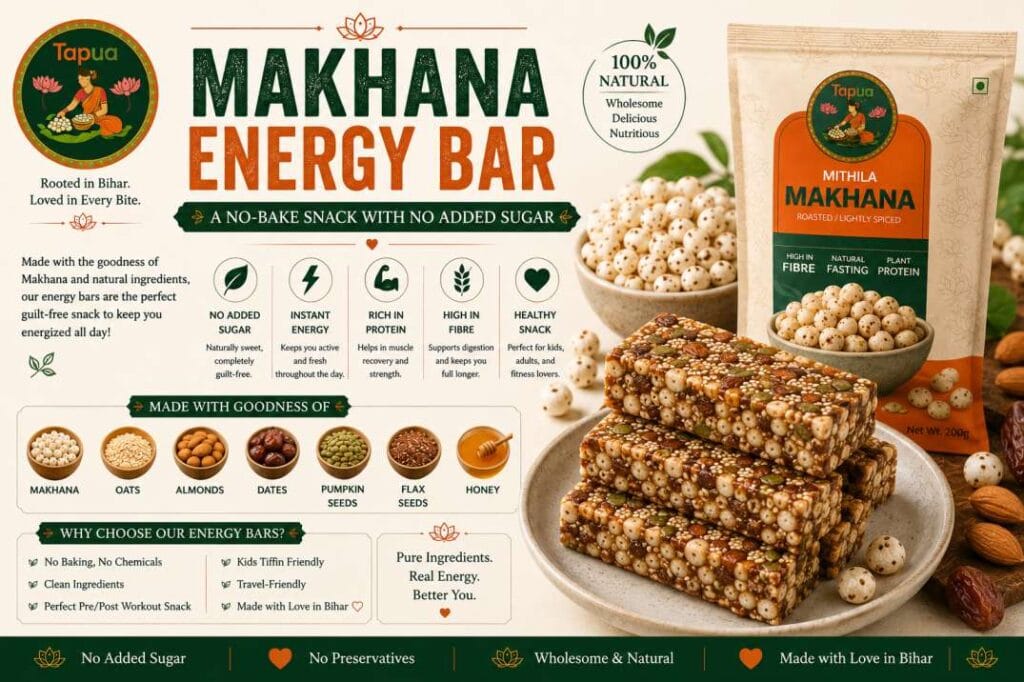
Most energy bars at the store lean on a name and a font to sound wholesome, with glucose syrup and palm oil sitting a few lines down the ingredient list regardless. This one skips that entirely. Roasted makhana, dates, figs, apricots, a handful of mixed nuts, and a layer of melted dark chocolate, pressed into a tray and chilled until firm. No oven, no refined sugar, nothing you cannot pronounce.
Tapua takes its name from an actual village in Mithila, and that same plainness carries over here: the bars are exactly what is in front of you, not a marketing claim about what they might contain. Ten minutes of prep, a few minutes at the stove, and a short wait in the fridge is the entire commitment.
This makhana energy bars recipe covers the full method, a note on what to do if the mixture feels too dry or too wet to press, how to store the finished bars, and the questions that come up most often once people start keeping a batch in the fridge.
What You’ll Need
- 1 cup Tapua phool makhana
- ¼ cup raisins
- 4 to 5 dates, deseeded
- 2 to 3 dried figs
- 5 to 6 dried apricots
- ½ cup mixed nuts [Brazil nuts, pecans, cashews and walnuts, or whatever combination you have on hand]
- 1 cup dark chocolate, chopped or as chips
- 1 tsp flax seeds [optional]
- 1 tsp sesame seeds [optional]
Cook’s tip: Use a dark chocolate that is at least 60 percent cocoa if you want this to stay in genuinely low-sugar territory. Milk chocolate works in a pinch, but it shifts the bars from a no-added-sugar snack to something closer to a treat.
Putting the Bars Together
- In a heavy-bottomed pan over low to medium heat, roast the makhana until golden and crisp; a piece should snap cleanly when pressed. Remove and let it cool completely.
- In the same pan, roast the mixed nuts until golden and fragrant. Let them cool alongside the makhana.
- Dry roast the dates, figs, and raisins briefly in the same pan, just enough to warm them through and soften them slightly. This makes them easier to grind.
- Once the makhana has cooled completely, grind it coarsely in a food processor and transfer it to a large bowl.
- Add the roasted nuts, the warmed dried fruit, and the flax seeds and sesame seeds if using. Pulse in short bursts until the mixture turns cohesive and slightly sticky, holding together when pressed rather than staying loose and crumbly.
- Melt the dark chocolate, either in short bursts in the microwave or over a double boiler, stirring until completely smooth.
- Pour the melted chocolate into the makhana mixture and combine thoroughly, until every bit is coated.
- Line a small tray or container with parchment paper. Press the mixture in firmly and evenly, smoothing the top with the back of a spoon.
- Refrigerate for 1 to 2 hours, until firm enough to hold a clean cut.
- Lift out and cut into bars or squares, whatever size suits your snacking.
Serving and Storing the Bars
These Tapua makhana bars are built for the fridge, not the counter. Eat straight from a chilled batch for the firmest bite, or let a piece sit out for five minutes if you prefer it slightly softer. They work well cut small for a lunchbox, or larger as a genuine breakfast on the go when mornings do not allow for much else.
Store in an airtight container in the refrigerator, where they hold their shape and texture for about a week. They can also be frozen for longer storage. Let them thaw for a few minutes at room temperature before eating, since the chocolate sets quite hard straight out of the freezer.
Common Questions About These Bars
Do these need to be refrigerated?
Yes, ideally. The dark chocolate softens at room temperature, especially in a warm kitchen, and the bars hold their shape and snap much better cold. If you are taking them somewhere for a few hours, an insulated bag keeps them firm enough.
Can I make these without chocolate?
Yes. Skip the chocolate and press the mixture into a tray as is, or roll it into balls instead of bars. The dates and figs already provide enough stickiness to bind everything without it, though you will lose the chocolate flavour and the firmer set it gives the finished bars.
Are these suitable for kids?
Generally yes, in reasonable portions, since the sweetness comes from dried fruit rather than refined sugar. The main thing to watch is portion size given how energy-dense nuts and dried fruit both are, and to check for any nut allergies before serving.
What can I use instead of figs or apricots?
Any combination of soft, sticky dried fruit works: more dates, dried mango, or dried apple all bind in a similar way. The exact mix matters less than getting the overall texture cohesive enough to press into a tray.
There is no protein-powder shortcut here and nothing freeze-dried, just roasted makhana, fruit, nuts, and chocolate, pressed together and left to set. That is more or less the whole pitch.