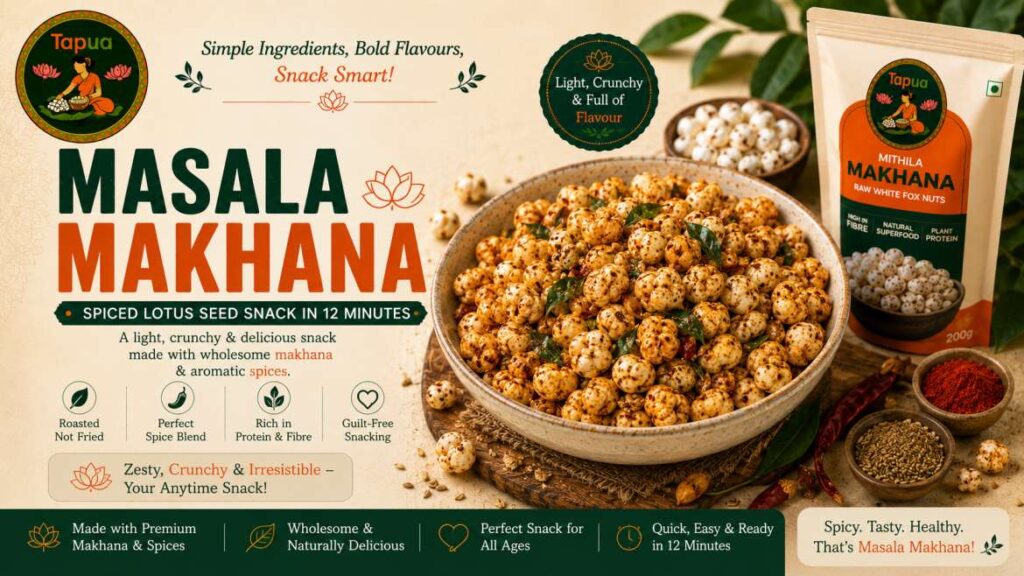
There is a moment when the spices hit the hot makhana, off the flame, swirled in quickly, where the whole kitchen smells like a good decision. It takes five ingredients beyond the makhana itself, and the result is a bowl of something properly spiced that gets eaten one piece at a time, each one snapping clean between your teeth.
This masala makhana recipe treats phool makhana as a real snack rather than a fasting-day afterthought. Kashmiri red chilli brings colour and mild heat, chaat masala adds tang, and cumin gives it depth, with the spices going in off the heat, which is the detail that makes the whole thing work. The Mallah families who tend the lotus ponds around Mithila have been harvesting makhana this way for generations, long before it turned up as a trending snack.
The whole thing is ready in 12 minutes and keeps for a week in a sealed jar, which is most of the case for making a batch tonight rather than putting it off.
[Table of Contents: auto-generated by WordPress plugin]
[Image: Masala makhana in a bowl, coated in red chilli, chaat masala and cumin spices | ALT: “masala makhana recipe in a bowl”]
Why Makhana Takes to Masala So Well
Makhana is essentially a flavour sponge. Its surface is porous and slightly starchy, which means dry spices stick to it well, especially with a thin coat of ghee underneath to help them hold. The trick in this masala makhana recipe is that the spices go in after the flame is off. Add them while the pan is still hot and the chilli powder scorches before it has a chance to flavour anything.
[External link: capsaicin and how chilli heat behaves under direct heat → “Authoritative source on capsaicin and cooking temperature”] explains part of why this matters: Kashmiri chilli loses its colour and turns bitter fast once it scorches, and there is no fixing a batch once that happens.
Larger, more uniform makhana is worth seeking out for this particular recipe, since a bigger surface area means more masala clings to each piece, which means more flavour landing in every bite rather than just on a few oversized ones.
There is also a practical reason this shows up as fasting food so often. A full bowl keeps you satisfied for a decent stretch of the day without the heaviness that comes with fried snacks, which matters during long stretches without a proper meal.
The five spices used here are also fairly forgiving in terms of pantry substitutions, which is part of why this masala makhana recipe has stayed a go-to rather than something made only when every single ingredient happens to be on hand. A missing spice rarely ruins the batch, it just shifts the flavour slightly in one direction or another.
Ingredients
- 1 tsp ghee [or neutral oil for vegan]
- 2 cups phool makhana (fox nuts / lotus seeds)
- ½ tsp Kashmiri red chilli powder
- ¼ tsp black pepper powder
- ¼ tsp cumin powder
- ½ tsp chaat masala
- ¼ tsp salt [or sendha namak for vrat]
Keep the spice quantities modest rather than generous. Makhana itself has a mild, almost neutral flavour, and it is easy to overwhelm that with too much chilli or too much chaat masala rather than letting the makhana’s own crunch come through alongside the spice.
All seven ingredients here are pantry staples in most Indian kitchens, which is part of why this recipe works as a same-evening snack rather than something that needs a special shopping trip first. The only ingredient most people occasionally need to pick up specifically is chaat masala, and even that keeps for months once opened.
[Image: Ingredients for masala makhana recipe, makhana, ghee and spices on a tray | ALT: “ingredients for masala makhana recipe”]
How to Make It
- Heat the ghee in a large kadai or heavy-bottomed pan over low flame. Let it melt and spread across the base. There should be just enough to lightly coat the makhana, not pool.
- Add the makhana and roast on a low flame, stirring every 30-45 seconds. This takes 7-10 minutes. The colour shifts from white to pale cream, and the pieces start to feel lighter in the pan. Test one by biting: it should snap, not give.
- Turn off the flame. Immediately add the Kashmiri red chilli powder, pepper powder, cumin powder, chaat masala, and salt.
- Stir quickly and thoroughly to coat every piece while the residual heat from the pan helps the spices adhere. Work fast. The coating sets as it cools.
- Spread on a plate or transfer to a bowl. Cool completely before storing.
[Image: Phool makhana being roasted in a kadai over low flame with ghee | ALT: “roasting makhana for masala makhana recipe”]
Getting the Timing Right
The order of operations in this masala makhana recipe matters more than the ingredient list does. Roasting fully before the spices ever touch the pan is what gives the final result its crunch, and adding seasoning even thirty seconds too early changes the outcome noticeably.
If a finished batch comes out chewy rather than crunchy, the most likely cause is that the makhana was pulled off the heat before it had fully roasted, or the pan was still hot enough when the spices went in to introduce a trace of moisture. Roasting fully first and seasoning only once the flame is off solves both problems at once.
| Cook’s tip: Add the spices only after turning off the flame. Kashmiri chilli powder, especially, burns in seconds over live heat and turns bitter. The residual warmth of the pan is all you need to make it stick. |
Masala Makhana Compared to Other Roasted Snacks
Next to roasted chickpeas or peanuts, masala makhana sits at the lighter end of the scale, since makhana itself is mostly air once popped and roasted. A full cup weighs very little compared to the same volume of nuts, which is part of why a generous bowlful does not feel heavy the way a similar serving of fried namkeen often does.
It also takes seasoning differently than most roasted snacks. Nuts and chickpeas have enough natural oil on their surface to hold a dry spice rub reasonably well, while makhana needs that thin layer of ghee to do the same job, which is the detail most people miss the first time they try making it from scratch.
Cost is another point in its favour compared with a mixed nut snack of a similar size. Makhana is generally less expensive by weight than cashews or almonds, which makes a generous bowl of this masala makhana recipe a more affordable everyday snack than a comparable bowl of roasted mixed nuts.
How to Serve Masala Makhana
Eat it warm, straight from the pan, since that is when the spices are at their liveliest. It also works well as a teatime snack alongside masala chai, where the heat of the chilli and the tang of the chaat masala cut through the sweetness of the tea nicely.
Pack a small container of it for a mid-morning desk snack, since it travels well without anything to spill or melt. For entertaining, serve it in a wide, shallow bowl with lime wedges on the side, so guests can add a final squeeze if they want a little extra brightness.
Storing Leftovers
Store in an airtight container at room temperature for up to a week. The crunch holds well as long as moisture stays out, and glass jars do a noticeably better job of that than plastic bags, which tend to let in a small amount of air over time.
If the makhana softens before the week is up, a 2-minute dry roast in a pan over low heat revives most of the texture. Don’t refrigerate this masala makhana recipe; the fridge introduces moisture the moment the container comes back out into room temperature air.
A small packet of silica gel, the kind that comes packed with new shoes or bags, tucked into the storage jar away from the food itself also helps in particularly humid kitchens. It is an easy way to buy an extra day or two of crunch without changing anything about the recipe itself.
When This Dish Shows Up
The spiced version of roasted makhana turns up during Navratri and other fasting periods across North and East India, where the ingredient is already a staple. The logic is practical: makhana provides substance without heaviness, the spices keep it interesting across hours of fasting, and it asks very little of the cook preparing it.
Using sendha namak, rock salt, instead of regular table salt is the only adjustment needed for most fasting guidelines. Everything else in this masala makhana recipe is already suited to a fasting table without further changes.
Outside of fasting season, the same bowl works just as well as an everyday snack, which is part of why it has moved well beyond its original role. There is nothing about the ingredient list that ties it exclusively to a religious calendar, it just happens to fit that calendar particularly well.
Common Mistakes to Avoid
Adding the spices while the pan is still on the flame is the most common mistake, and the one that causes the most damage. Even a few seconds of direct heat is enough to scorch Kashmiri chilli powder and turn it bitter rather than vibrant.
Under-roasting the makhana before seasoning is the second. A piece that has not fully crisped will never reach the right texture no matter how well it is seasoned afterward, since the spices cannot fix a roast that stopped too early.
Using too much ghee is the third. This recipe only needs a thin coating to roast properly, and excess ghee leaves the batch greasy and shortens how long it stays crisp once stored.
Storing it warm is the fourth. Sealing a container before the makhana has fully cooled traps steam inside, which softens everything within a few hours regardless of how well it roasted to begin with.
Going too heavy on the chaat masala is the fifth. It is a tangy, fairly assertive spice blend on its own, and doubling the amount hoping for a bolder flavour usually just makes the batch taste salty and sour rather than more interesting. A light hand with all five spices generally gives a more balanced result than a heavy one.
Make-Ahead Tips for Festive Trays
This masala makhana recipe scales up easily for a festive tray or a gathering, though it is worth roasting in batches rather than crowding a single large pan. An overcrowded pan roasts unevenly, and the makhana at the centre often stays underdone while the pieces near the edges are already crisp.
If making it a day ahead, season it as usual and store in an airtight container once fully cool, then give it a quick 1 to 2 minute refresh in a dry pan before serving. That short reheat brings back any crunch lost overnight without needing to reseason or re-roast the whole batch.
More Tapua Makhana Recipes to Try
If this masala makhana recipe becomes a regular snack, [Internal link: Roasted Fox Nuts Recipe → “Roasted Fox Nuts: 5 Easy Makhana Flavours”] is worth trying next for a milder, more flexible base recipe.
For something with more body, [Internal link: Phool Makhana Curry → “Phool Makhana Curry: Lotus Seeds in Gravy”] turns the same ingredient into a full dinner dish, and [Internal link: Mint Makhana Recipe → “Mint Makhana Recipe: Pudina Fox Nuts”] is a good next stop for a cooler, herbier take on the same roasting technique.
Questions People Ask
Can I make masala makhana without ghee?
Yes, any neutral oil works in its place. Coconut oil adds a faint sweetness that actually pairs well with the Kashmiri chilli, and the texture comes out the same either way. For a fully vegan version, skip the ghee entirely and use oil throughout.
Is masala makhana suitable for fasting?
It is, with one swap: use sendha namak, rock salt, in place of regular salt. Everything else in this recipe is already suited to most vrat guidelines. Makhana itself is one of the most common fasting ingredients in North and East Indian cooking.
What spices work best in masala makhana?
Kashmiri red chilli, chaat masala, cumin, and salt form the base of this masala makhana recipe. You can extend it with amchur, dried mango powder, for extra tang, or turmeric for colour. Keep the quantities modest, since makhana has a mild flavour and is easy to overwhelm.
Why is my masala makhana not crunchy?
Two likely causes: the makhana was not roasted long enough on low heat before the spices went in, or the pan was still too hot when they did, introducing a trace of moisture. Roast fully first, then season only once the flame is off.
How long does masala makhana last?
Up to 7 days in an airtight container at room temperature. Quality is at its best in the first 2-3 days, after which the crunch slowly starts to soften even with good storage.
Can I make a bigger batch at once?
Yes, though roast the makhana in two smaller batches rather than overcrowding one large pan. A crowded pan roasts unevenly, and the spices go on faster and more evenly once the makhana itself is properly and evenly roasted.
What can I add to make this spicier?
A pinch of plain red chilli powder on top of the Kashmiri chilli adds heat without changing the colour much, since Kashmiri chilli is chosen mainly for its colour and mild flavour rather than intensity. Add it at the same off-heat stage as the rest of the spices.
Can I use roasted makhana that I bought ready-made?
Pre-roasted plain makhana can work as a shortcut, though it needs a brief warm-up in a dry pan before the spices go in, since the residual heat is what makes the seasoning stick. Skipping that step leaves the spice powder loose rather than properly coating each piece.
Does the size of the makhana matter for this recipe?
It does, mostly for how evenly the spice coats each piece. Larger, more uniform makhana gives the seasoning more surface area to grip, which means a more even coating from piece to piece compared with a mixed bag of smaller, uneven sizes.
Can I freeze masala makhana?
It is not recommended. Freezing introduces moisture once the batch thaws, and that moisture is exactly what this recipe works hardest to avoid at every other stage. Room-temperature storage in an airtight jar gives a better result than the freezer ever would here.
[Image: Finished masala makhana served in a bowl, golden and spiced | ALT: “masala makhana recipe finished in a bowl”]
Every batch of Tapua makhana that goes into this masala makhana recipe comes from Mallah families who have harvested these lotus ponds around Mithila for generations, long before makhana found its way onto snack trays outside the region. A bowl of it is a small thing, but it connects to all of that, a short chain from a quiet pond to a spiced bowl on the table tonight. Worth knowing, while you are eating it.