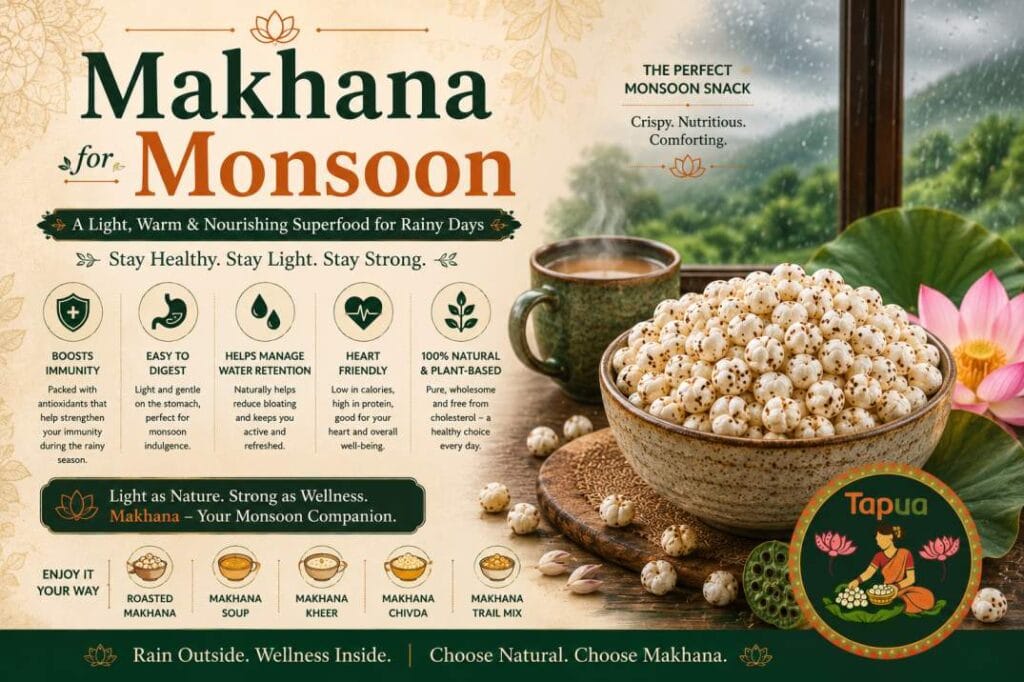
Monsoon does something specific to snacking habits in most Indian households. The rain starts, the chai goes on, and the craving for something fried and hot kicks in almost on schedule. Pakoras, samosas, bhujia, all reliable, all heavy on oil at a time of year when digestion already tends to slow down a little. Makhana for monsoon snacking is not a trend so much as a quieter, longstanding alternative that solves the same craving without the same aftermath.
This guide looks at why the rainy season is genuinely a harder stretch for digestion and immunity, why a roasted, low-oil snack like makhana fits that window better than most fried alternatives, what to watch for with storage once the air turns humid, and how the monsoon season actually connects to where makhana itself comes from.
Why Monsoon Is Harder on Digestion
Humidity and a drop in physical activity during the rainy months slow digestion down for a lot of people, which is part of why heavy, oily food tends to sit less comfortably than it would in drier weather. Ayurvedic tradition has long treated monsoon as a season for lighter eating for exactly this reason, favouring warm, easily digestible food over anything fried or excessively rich.
Immunity also tends to dip slightly during the monsoon transition, as the body adjusts to sudden temperature drops, damp conditions, and the general uptick in waterborne and airborne illness the season brings. None of this makes fried snacks forbidden, only that a snack which is genuinely lighter on the stomach is a more useful everyday default than an occasional treat.
Where Makhana Fits Into That
Roasted Tapua makhana, especially roasted dry or with just a teaspoon of ghee rather than deep-fried, carries a fraction of the oil of a pakora or samosa for a similar amount of crunch and satisfaction. It is naturally gluten-free, reasonably high in protein and fibre for a puffed snack, and digests easily enough to make sense even on a day when nothing else feels like sitting well.
It also answers the actual craving at the centre of monsoon snacking, which is rarely about taste alone. Most people reach for a fried snack on a rainy afternoon because it is warm, crunchy, and ready quickly with a cup of chai. A pan of roasted makhana with a little chaat masala or black pepper covers all three of those, minus the oil and the heaviness that follows an hour later. how to roast makhana well
Keeping Makhana Crisp Once the Air Turns Humid
Humidity is the one real obstacle to keeping makhana around during monsoon, since it absorbs ambient moisture more readily than most packaged snacks. An airtight container in a genuinely dry part of the kitchen, away from the window and the stove, matters more during these months than at any other time of year, whether you are storing a Tapua pack straight from the box or a larger batch roasted at home. the full rules
If a batch does go a little soft from the humidity, a quick two-minute dry roast brings most of the crunch back, which is worth knowing during a season when that is more likely to happen than usual.
The Monsoon’s Quieter Connection to Where Makhana Comes From
There is also a less obvious link between makhana and the monsoon, one that has nothing to do with snacking. Makhana grows in shallow ponds and wetlands across Bihar, tended for months by Mallah farming families who work the water on bamboo rafts to harvest the seed pods by hand. The crop’s growing cycle runs roughly eight to ten months, and the harvest itself stretches across the monsoon months and into autumn, depending on the pond and the season’s rainfall.
The same rains that send most people indoors for chai and something fried are, further upstream, part of what keeps those ponds full enough for the next season’s crop to grow at all.
Monsoon Makhana Questions
Is makhana good for an upset stomach?
Plain roasted makhana, without heavy spicing, is generally easy on the stomach and is sometimes used as a light snack during recovery from minor stomach upset, though it is not a substitute for medical advice if symptoms are serious or persistent.
What monsoon snacks should I cut back on?
Deep-fried snacks bought from street vendors carry the added monsoon risk of oil that has been reused many times and water that may not be properly filtered, on top of the usual concerns about excess oil. Cutting back on those specifically, rather than fried food in general, is the more useful monsoon habit.
Can I make makhana spicier without making it unhealthy?
Yes. A dry roast with chaat masala, black pepper, or a light dusting of red chilli powder adds plenty of flavour without adding oil. Save the ghee-roasted version for when you want a slightly richer bite, and keep a dry-roasted batch on hand for days when you want spice without the extra fat.
Does humidity affect makhana’s nutritional value?
Not meaningfully in the short term. Humidity affects texture first, makhana goes soft, well before it affects nutrition in any noticeable way. The bigger risk in letting a softened batch sit too long is mould, not a meaningful nutrient loss, which is why discarding anything that smells off matters more than worrying about lost nutrition.
None of this makes makhana a cure for monsoon, just a snack that happens to suit the season better than most of the alternatives sitting in front of a rainy window. Keep a roasted batch of Tapua makhana on hand through the season, and the chai-and-something-crunchy habit takes care of itself, minus the oil and the heaviness that usually comes with it.