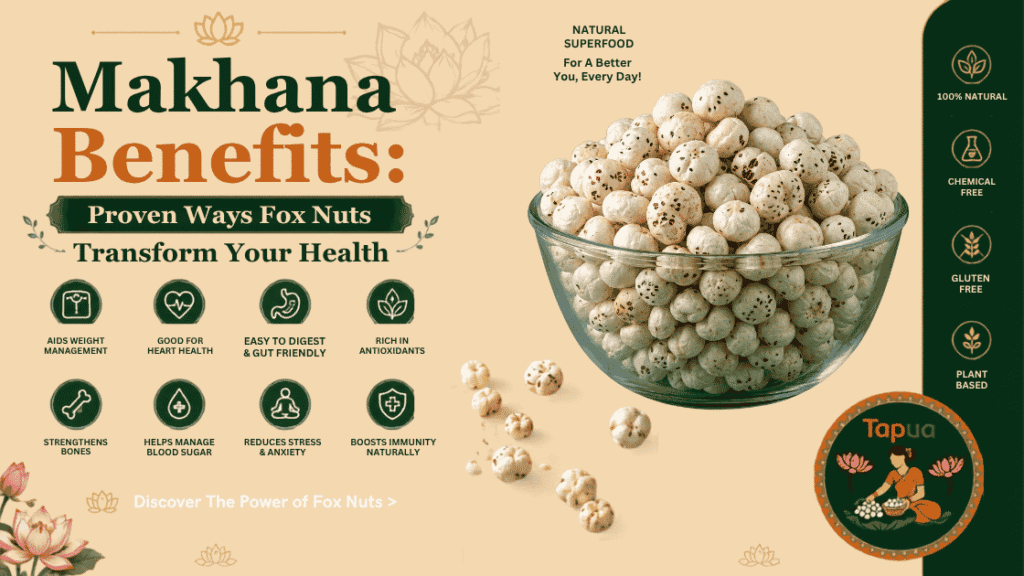
If you’ve been reaching for the same old snacks out of habit, makhana benefits might be the reason you switch for good. Makhana — called fox nuts or water lily seeds in English — has quietly moved from a regional Bihar delicacy to one of India’s most talked-about functional foods. And for good reason: few snacks deliver this combination of low calories, complete plant protein, essential minerals, and genuine medicinal properties in such a convenient form.
This isn’t hype. The health benefits of makhana are backed by nutritional science, Ayurvedic tradition, and an impressive micronutrient profile. Here are 12 of the most significant.
Table of Contents
- The Nutritional Profile Behind Makhana’s Benefits
- 12 Evidence-Based Makhana Benefits
- How Much Makhana to Eat Per Day
- Are There Any Side Effects?
- FAQs
The Nutritional Profile Behind Makhana Benefits
Every health benefit of makhana traces back to its exceptional nutritional composition. Per 100g of plain makhana:
- Calories: ~347 kcal (low for a snack)
- Protein: 9.7g (complete — all essential amino acids present)
- Dietary Fibre: 14.5g (exceptional for a snack food)
- Fat: 0.1g (essentially fat-free in natural form)
- Magnesium: 210mg (~50% of daily adult requirement)
- Calcium: 60mg
- Iron: 1.4mg
- Phosphorus: 200mg
- Glycemic Index: 38–42 (classified as low)
This isn’t a typical snack profile. It’s the profile of a whole food that happens to be satisfying, convenient, and genuinely tasty when roasted correctly.
12 Evidence-Based Makhana Benefits
1. Makhana Benefits for Weight Management
Makhana is one of the few snacks that actually helps with weight management rather than working against it. A 30g serving provides roughly 104 calories, 2.9g protein, and 4.4g dietary fibre — a combination that triggers satiety hormones and reduces the urge to snack again soon after.
Its near-zero fat content means calorie density stays low, even in relatively generous portions. Compare this to 30g of almonds (174 calories, 15g fat) or potato chips (160 calories, 10g fat). Research supports the idea that high-fibre, high-protein snacks reduce overall daily calorie intake by reducing hunger at subsequent meals.
2. Makhana Benefits for Blood Sugar Control
With a glycemic index of 38–42 (Krishival GI research), makhana causes slow, gradual rises in blood sugar — not the sharp spikes that follow most carbohydrate-rich foods. This makes it genuinely suitable for people managing blood sugar, including those with type 2 diabetes.
The magnesium in makhana (210mg/100g) plays a role too: magnesium enhances insulin signalling, and deficiency is common in people with diabetes. A 30g serving provides roughly 15% of daily magnesium needs.
3. Makhana Benefits for Bone Strength
Makhana is a meaningful source of three nutrients critical for bone health: calcium (60mg/100g), magnesium (210mg/100g), and phosphorus (200mg/100g). These minerals work together to maintain bone density and reduce the risk of osteoporosis, particularly important for women post-menopause and for the elderly.
Unlike dairy, makhana is lactose-free, making it a viable calcium source for those who avoid milk products.
4. Makhana Benefits for Heart Health
Makhana supports cardiovascular health through several mechanisms:
- Near-zero fat content, with essentially no saturated or trans fats
- High magnesium, which helps regulate blood pressure and reduces arterial stiffness
- Low sodium (in its natural unsalted form), supporting healthy blood pressure
- Kaempferol — a natural flavonoid found in makhana with documented anti-inflammatory and cardioprotective properties
The antioxidant kaempferol has been studied for its role in reducing inflammation and protecting blood vessel walls from oxidative damage — a key factor in long-term heart health.
5. Rich in Antioxidants — Anti-Ageing Properties
Makhana contains kaempferol and other polyphenolic antioxidants that neutralise free radicals — unstable molecules that damage cells and accelerate ageing. Traditional Ayurvedic medicine has long described makhana as a rejuvenating (Rasayana) food, and modern research on kaempferol supports this categorisation.
These antioxidants benefit skin health, cellular integrity, and may reduce chronic disease risk over time.
6. Excellent for Digestive Health
At 14.5g of dietary fibre per 100g, makhana is one of the most fibre-dense snacks available. Fibre:
- Supports regular bowel movements and prevents constipation
- Feeds beneficial gut bacteria (prebiotic effect)
- Slows glucose absorption (supporting blood sugar stability)
- Increases satiety, reducing overeating
For anyone with IBS or digestive irregularity, makhana’s gentle, non-irritating fibre profile makes it significantly easier to tolerate than many high-fibre alternatives.
7. A Rare Complete Plant Protein
Most plant proteins are “incomplete” — they’re missing one or more of the nine essential amino acids. Makhana is an exception: it contains all essential amino acids, including methionine and lysine, which are often deficient in grain and legume proteins.
This makes makhana particularly valuable for vegetarians, vegans, or anyone trying to increase protein intake without relying on meat or dairy.
8. Makhana Benefits for Sleep Quality
Magnesium plays a documented role in regulating the nervous system and promoting deeper, more restorative sleep. With 210mg of magnesium per 100g, makhana provides a meaningful dose of this sleep-supporting mineral.
Makhana also contains tryptophan — a precursor to serotonin and melatonin — which further supports its traditional use as an evening snack for calming the nervous system before bed.
9. Makhana Benefits for Skin
The combination of antioxidants (kaempferol, quercetin), anti-inflammatory compounds, and high zinc content in makhana supports skin health from the inside out. Antioxidants reduce oxidative damage to skin cells; anti-inflammatory properties help manage conditions like acne and eczema; zinc supports collagen synthesis and wound healing.
10. Makhana Benefits During Pregnancy
Makhana provides three nutrients that are especially critical during pregnancy: iron, calcium, and folate. Iron supports haemoglobin production and oxygen delivery to the developing baby. Calcium contributes to foetal bone and teeth development. Folate is essential for neural tube development in early pregnancy.
According to Cryoviva Life Sciences, makhana is considered safe during all three trimesters when consumed in moderation (20–30g/day). Always consult your gynaecologist before making dietary changes during pregnancy.
11. Makhana Benefits for Liver and Kidney Health
Ayurvedic medicine has long prescribed makhana for kidney and liver support, and modern research points to plausible mechanisms: its anti-inflammatory compounds may reduce oxidative stress in these organs, and its low fat, low sodium profile reduces the dietary burden on both.
Some studies on Euryale ferox extract suggest protective effects against liver cell damage, though more human clinical trials are needed to draw firm conclusions.
12. Suitable for Religious Fasting — And Everyday Eating
Makhana is classified as a “phalahari” (sattvic) food in Hindu dietary tradition — pure, light, and permissible during Navratri, Ekadashi, and other fasts. This classification reflects its genuinely clean profile: no grains, no pulses, no additives, just one ingredient.
That same simplicity makes it one of the cleanest everyday snacks available, particularly when sourced without added oils, salt, or flavourings.
How Much Makhana to Eat Per Day?
Most nutritionists recommend 20–30g of plain makhana per day as a snack — roughly a small handful. This provides about 70–105 calories, 2–3g protein, and 3–4g dietary fibre, fitting comfortably into most daily calorie budgets.
If you’re using makhana as a meal component (in kheer, curry, or raita), portion sizes can naturally be larger depending on preparation.
Are There Any Side Effects?
For most people, makhana is extremely well-tolerated. However:
- Excessive consumption (over 100g/day) may cause digestive discomfort due to high fibre
- Flavoured commercial makhana often contains added salt, sugar, or seed oils — check labels
- People with seed or plant allergies should exercise standard caution
- Pregnant women should keep to moderate portions and consult a doctor
FAQs
What are the top makhana benefits for females specifically?
For women, makhana’s most significant benefits include bone health (calcium, magnesium), pregnancy nutrition (iron, folate), hormonal balance (magnesium, zinc), skin health (antioxidants), and weight management (high satiety at low calorie cost).
Can I eat makhana every day?
Yes. A 20–30g daily serving of plain, traditionally roasted makhana is both safe and beneficial for most adults. Its low GI, complete protein, and mineral density make it one of the most nutritionally reliable everyday snacks available.
Is roasted makhana healthier than raw?
From a nutrition perspective, the difference is minimal. From a digestibility and taste perspective, roasted wins every time — it’s easier to chew, more flavourful, and has a better texture. Tapua’s makhana is traditionally roasted using the bhoojna method before packaging.
The makhana benefits listed here are supported by nutritional science and consistent with Ayurvedic tradition. For medical conditions including diabetes or pregnancy, consult a qualified healthcare professional before making significant dietary changes.
Ready to experience these benefits? Explore Tapua’s single-origin, zero-additive makhana at tapuafoods.com/shop.