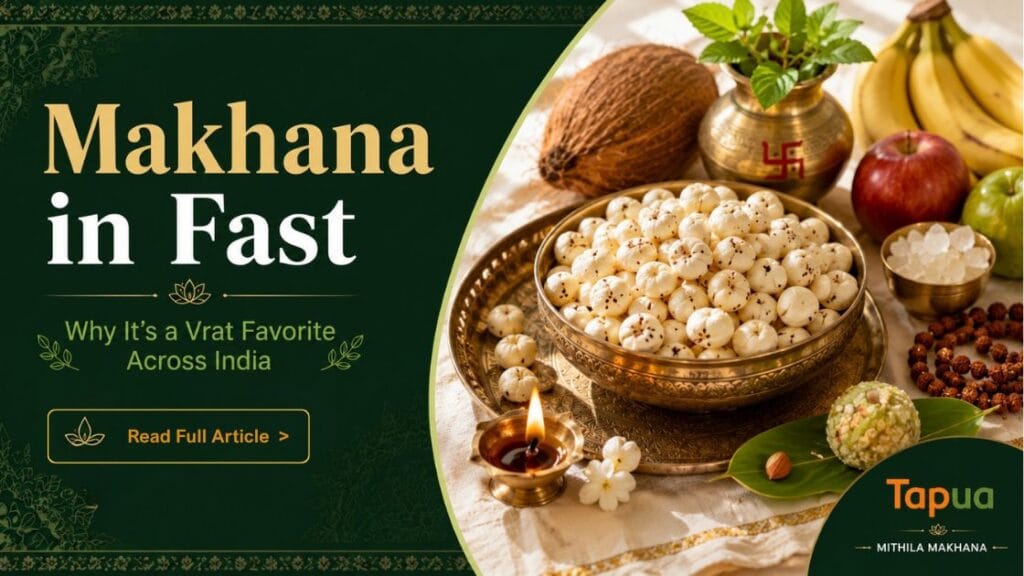
Can we eat makhana in fast? If you’ve ever found yourself hungry during Navratri, Ekadashi, Shravan, or any other significant Hindu fast — wondering what you can actually eat — the answer to makhana in fast is a definitive, welcome yes.
Makhana is not just permitted during fasting in Hindu tradition; it is one of the most valued fasting foods across North and East India. This guide explains why, covers the traditional and modern ways to eat makhana during vrat, and includes the most popular fasting recipes for Navratri and beyond.
Table of Contents
- Is Makhana Allowed in All Hindu Fasts?
- Why Is Makhana in Fast Considered Ideal?
- The Spiritual Significance of Makhana During Vrat
- Which Fasts Allow Makhana?
- 5 Traditional Makhana Fasting Recipes for Navratri
- Nutritional Benefits of Eating Makhana in Fast
- What NOT to Eat with Makhana During Fasting
- FAQs
Is Makhana Allowed in All Hindu Fasts?
Yes. Makhana in fast is permitted across virtually all major Hindu fasting traditions, including Navratri, Ekadashi, Janmashtami, Mahashivratri, Shravan Mondays, and regional fasts across North, East, and Central India.
Makhana is classified as a “phalahari” food — derived from “phala” (fruit/produce) — meaning it belongs to the category of natural, unprocessed foods that are considered acceptable during fasts where grains (wheat, rice, corn), pulses, and processed foods are prohibited.
It is also categorised as “sattvic” — pure, light, and spiritually elevating in Ayurvedic and yogic dietary philosophy. Sattvic foods are specifically recommended for periods of spiritual practice, meditation, and fasting.
Why Is Makhana in Fast Considered Ideal?
Beyond the spiritual classification, there are very practical reasons why makhana has been the go-to fasting food for centuries:
- Sustaining without being heavy: makhana provides slow-release energy (low GI 38–42) without making the body feel sluggish or over-full
- Easy to digest: the light, airy texture and clean nutritional profile means no digestive discomfort during a period of already reduced food intake
- Versatile: can be roasted as a snack, cooked into kheer, made into curry, halwa, or sabzi — adapting to the different meal traditions of different fasting days
- Nutritionally sustaining: provides protein, calcium, magnesium, and fibre even when total food intake is reduced
- Only needs sendha namak: rock salt (sendha namak) is the only salt permitted in most fasting traditions, and makhana pairs perfectly with it
The Spiritual Significance of Makhana During Vrat
Makhana’s use in religious observance predates modern nutritional science by centuries. In the temples of Mithila — the region where makhana is grown and harvested — it has been offered as prasad (sacred offering) to deities for generations.
The Mithila region itself has deep religious and mythological significance: it is believed to be the birthplace of Goddess Sita, and makhana from its ponds has been part of temple offerings and auspicious ceremonies in this region since ancient times.
In contemporary practice, makhana is commonly used in preparations for Navratri (offered to Goddess Durga), Janmashtami (Lord Krishna), and Mahashivratri (Lord Shiva). Makhana kheer is a particularly common prasad preparation across all these occasions.
Which Fasts Allow Makhana in Fast?
- Navratri (both Chaitra and Sharad) — makhana is one of the most popular fasting foods during the nine-day celebration
- Ekadashi — the bi-monthly fast observed on the 11th lunar day; makhana is a standard Ekadashi snack
- Janmashtami — makhana kheer is a traditional offering and food on this day
- Mahashivratri — a strict fast where makhana is one of the few permitted foods
- Shravan Mondays (Sawan Somwar) — makhana in fast is common on these weekly fasts
- Pradosh Vrat — bi-monthly fast observed on the 13th lunar day
- Personal fasts (Mangalwar, Shaniwar vrat) — most personal weekly fasts permit makhana
According to The Foods Life and South Indian Recipes, makhana’s phalahari status makes it broadly permissible across these fasting occasions.
5 Traditional Makhana Fasting Recipes for Navratri
1. Roasted Makhana with Sendha Namak (The Simplest Vrat Snack)
Dry roast 50g makhana in a pan over low-medium heat for 6–7 minutes, stirring continuously. Season with sendha namak (rock salt) and freshly cracked black pepper. A handful of roasted pumpkin seeds and raisins added alongside creates a complete, satisfying fasting snack.
2. Makhana Kheer (The Classic Navratri Dessert)
Roast 100g makhana in 1 tsp ghee until slightly golden. Crush half roughly. Heat 1 litre full-fat milk to a simmer. Add whole and crushed makhana. Simmer on low for 20–25 minutes, stirring regularly, until milk thickens. Add 3–4 tbsp sugar, saffron soaked in warm milk, cardamom powder, and blanched cashews and almonds. Serve warm or chilled. This is offered as prasad in many homes on Navratri nights.
3. Makhana Aloo Curry (The Substantial Fasting Meal)
Roast 100g makhana until crisp. In a separate pan, heat 1 tbsp ghee, add cumin seeds, then add boiled potato cubes. Season with sendha namak, black pepper, and dried ginger powder (saunth). Add a little water to loosen, bring to simmer, then fold in makhana. Cook 3 more minutes to absorb flavour. Substantial enough to replace a proper meal during the fast.
4. Makhana Halwa (Vrat Mithai)
Grind 100g roasted makhana to a coarse powder. Heat 2 tbsp ghee, add the makhana powder and stir on low heat until golden and fragrant (5 minutes). Add 1/2 cup warm milk gradually, stirring to combine. Add 3 tbsp sugar and continue stirring until halwa thickens and releases from the pan. Garnish with cardamom, saffron, and chopped dry fruits. One of the most beloved prasad preparations for Navratri puja.
5. Makhana Raita (Cooling Vrat Side Dish)
Gently crush 30g roasted makhana into rough pieces. Fold into thick chilled curd with sendha namak, roasted cumin powder, and fresh coriander. A cooling, protein-rich accompaniment to the aloo curry or as a standalone snack in the afternoon.
Nutritional Benefits of Eating Makhana in Fast
Fasting reduces overall food and nutrient intake. The value of makhana during fasting is that it compensates meaningfully for this reduction:
- Protein (9.7g/100g): maintains energy and prevents muscle breakdown during prolonged fasting
- Magnesium (210mg/100g): supports nervous system health and may reduce the headaches some people experience while fasting
- Low GI (38–42): prevents blood sugar crashes that cause fatigue and irritability during fasting
- Fibre (14.5g/100g): supports digestive health even when overall food quantity is reduced
- Calcium (60mg/100g): supports bone health during periods when dairy may be the primary other source
What NOT to Eat with Makhana During Fasting
During most Hindu fasts, the following should NOT be combined with makhana:
- Regular table salt (iodised) — use sendha namak only
- Onion, garlic, or non-permitted spices (regional variations apply)
- Grains or pulses (these break the fast entirely)
- Commercial flavoured makhana with prohibited additives
Regional fasting rules vary significantly. In some traditions, tomatoes, certain spices, or specific vegetables are also avoided. Follow the fasting rules observed in your family or community tradition.
FAQs
Is makhana allowed during Navratri fast?
Yes. Makhana is one of the most widely eaten and culturally significant foods during Navratri. It is classified as phalahari and sattvic, making it appropriate for all nine days.
Can makhana be eaten during water fast?
No. A strict water fast means no food of any kind, including makhana. Makhana is appropriate for partial fasts (where natural, grain-free foods are permitted) — not for total abstinence fasts.
Is makhana kheer made with sugar allowed in Navratri fast?
Yes. Plain white sugar (not processed with bone char) is generally permitted in Navratri fasting. The restriction is on grains, pulses, table salt, and non-sattvic foods — not on natural sweeteners. Regional traditions may vary.
How much makhana can you eat during a fast?
There’s no specific religious restriction on quantity. Nutritionally, 50–100g per day across 2–3 servings is a reasonable and sustaining amount for a fasting day.
Makhana in fast is one of those rare intersections where spiritual tradition and modern nutritional science align completely. It’s permitted, it’s nourishing, it’s versatile enough to carry you through an entire day’s meals — and it connects every bite to a tradition that stretches back centuries in Bihar’s Mithila region.For GI-tagged, traditionally processed makhana — the kind used in temple offerings and fasting kitchens for generations — visit tapuafoods.com/shop.